
Mount Pleasant Records for One Resident
A focused Mount Pleasant name check is not a single official list. Charleston County property cards can connect a named owner to a tax-date parcel and distinguish its physical and mailing fields. Recorded instruments can connect parties to a transaction. Court, probate, voter, vital, business, and license sources answer narrower questions. Each result needs a date, a custodian, and a clear statement of what it does not establish.
| Record trail | What it can confirm | Mount Pleasant keeper | Access boundary |
|---|---|---|---|
| Property Record Card | Tax-date owner, parcel, property and mailing fields | Charleston County Property Record Cards | It does not list every resident. |
| Recorded instrument | Recorded party, date, legal description, and document lead | Charleston County Register of Deeds | A recorded party is not proof of occupancy. |
| Court or probate index | Public case, party role, or estate relationship | County court and Probate Court | Sealed and restricted material remains unavailable. |
| Voter process | A voter’s own registration functions or a tailored official request | State Election Commission and County elections office | It is not a public street roster. |
| Vital, business, or license record | A permitted life event, entity role, or credential affiliation | State or the relevant county custodian | Eligibility and address limits apply. |
Start with an address when the Mount Pleasant question concerns a parcel. Start with a full name, a rough time period, and an already known affiliation when no address is known. The property card offers owner-name, street-address, parcel/TMS, and sales-date paths. Its basic deed-transfer data are complete online back to 1991, while the Register of Deeds supplies the recorded-document follow-up.
Verifying a Mount Pleasant Resident
Use a small evidence sheet for a Mount Pleasant name: known spelling, initials or former names, a rough period, and an address or relationship only when already known. A tax mailing field can point outside Mount Pleasant, and a business-agent address may point somewhere else entirely. Match several stable details rather than treating a shared name as a result. If the sources conflict, leave the question unresolved until the relevant custodian can clarify its own record.
- Search the County property card by address or owner name. Note the TMS, tax-date owner, legal description, property address, mailing address, and deed reference.
- Use the recorded party, date, and legal description at the Register of Deeds to confirm the instrument behind the property lead. Do not call a grantee a current occupant.
- For a specific public court matter, check the case number, court, party role, dates, and disposition. A case caption alone is weak identity evidence.
- Use a vital, probate, voter, business, or license channel only for the narrow fact it can lawfully answer. Request a custodian-issued copy when official certification is required.
A Mount Pleasant Property Record Card provides a useful sample inventory. Its displayed fields are research leads, not a certified title opinion.
| Parcel identity | Parcel ID or TMS, subdivision, tax district, legal description, and jurisdiction. |
|---|---|
| Address fields | Property address and mailing address appear separately. |
| Owner fields | Current Owner and owner names as of January 1. |
| Transfer fields | Deed book and page, deed date, sale date, and sale price. |
| Older-record leads | Card Image, Plat Comments, and Owner Comments areas where available. |
- Docket
- A court’s running record of filed case events. It shows that an event was recorded, not that every claim in a file is true.
- Index and image
- An index helps locate a record by names, dates, or identifiers. An image is the scanned document when the custodian makes one available.
- Certified copy
- A copy issued or certified by the custodian for a purpose requiring official authentication. Eligibility, fees, and availability vary by record.
Mount Pleasant Court Names in Context
Mount Pleasant court research has separate lanes. The Town Municipal Court handles municipal-code matters and misdemeanor state violations. Charleston County’s Public Index is the starting point for many County trial-court records, while Probate has separate estate, will, guardianship, conservatorship, commitment, and marriage-search pathways. A county case index can establish a filing or docket event. It cannot establish a current Mount Pleasant address or prove an allegation.
The Charleston County Public Index is the official web entry point for a case search. For Common Pleas cases, the Clerk says that available documents are reached through the documents icon on the case-details actions screen. Use the case number, court, party role, event dates, and disposition to keep a Mount Pleasant same-name search grounded. Family, juvenile, adoption, expunged, sealed, and other restricted records are not a general public lookup resource.
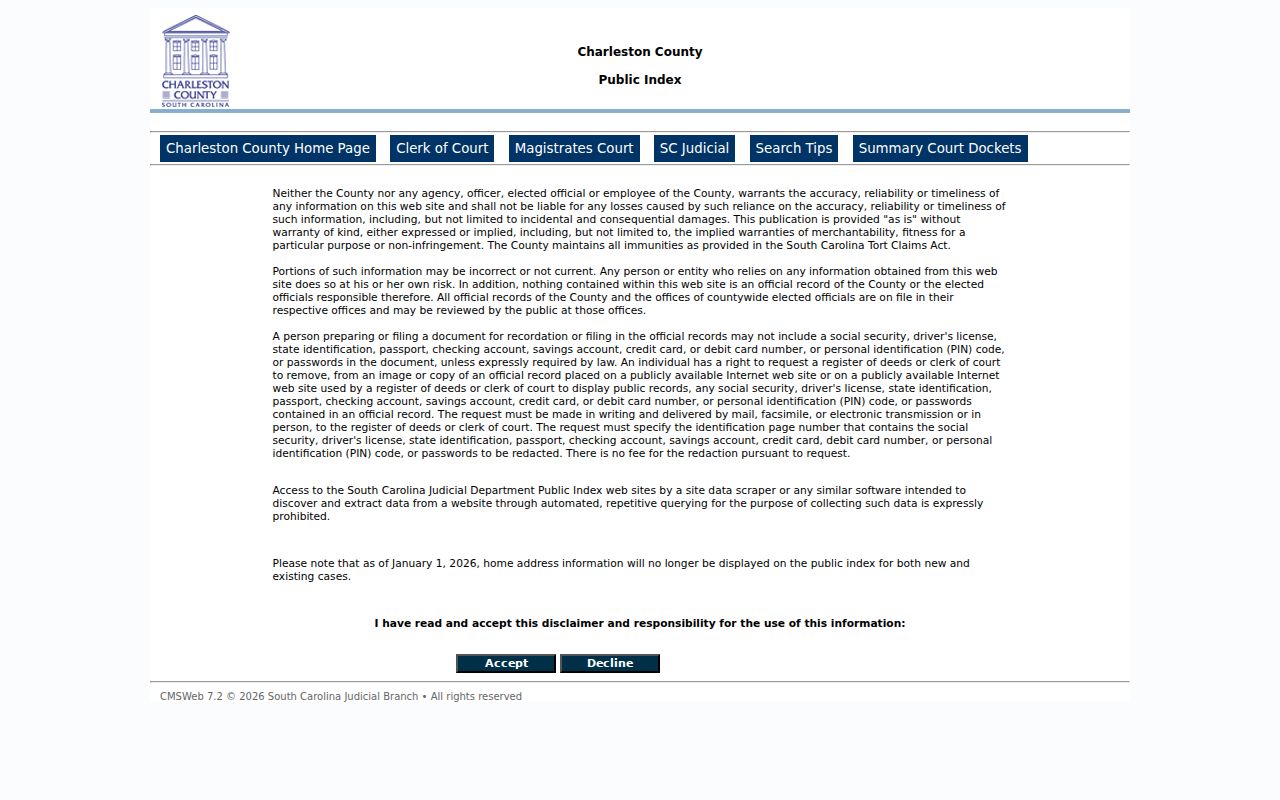
The County interface is a case-index entry point, so a Mount Pleasant result still needs its court and case context before it can support a conclusion.
When online material stops short, use the Clerk or court counter, a request for an identified case copy or certified copy, or the correct court’s status process. The County Clerk lists online services for circuit, family, daybook, and other court tools, and the Town Municipal Court can answer questions about its own identified matter. Court access rules control what can be viewed or copied.
Mount Pleasant Voter Record Boundaries
MySCVotes is built around a voter’s own registration, ballot, polling-place, and voting-history functions. It is not a verified public system for browsing Mount Pleasant residents by street or for building a general roster. A positive election record is time-bound, and an absent result does not show that someone never lived in Mount Pleasant. Compare any lawful official response with a dated property, deed, or other source that addresses the actual question.
The MySCVotes voter tools direct people to registration and polling functions, while the Charleston County Board of Voter Registration & Elections is the local process contact. For a discrete record request, the State Election Commission’s written process asks requesters to narrow the subject, date range, and custodian. The County notes one practical detail for ballot tracking: enter the city as “Mount Pleasant,” not “Mt. Pleasant.”
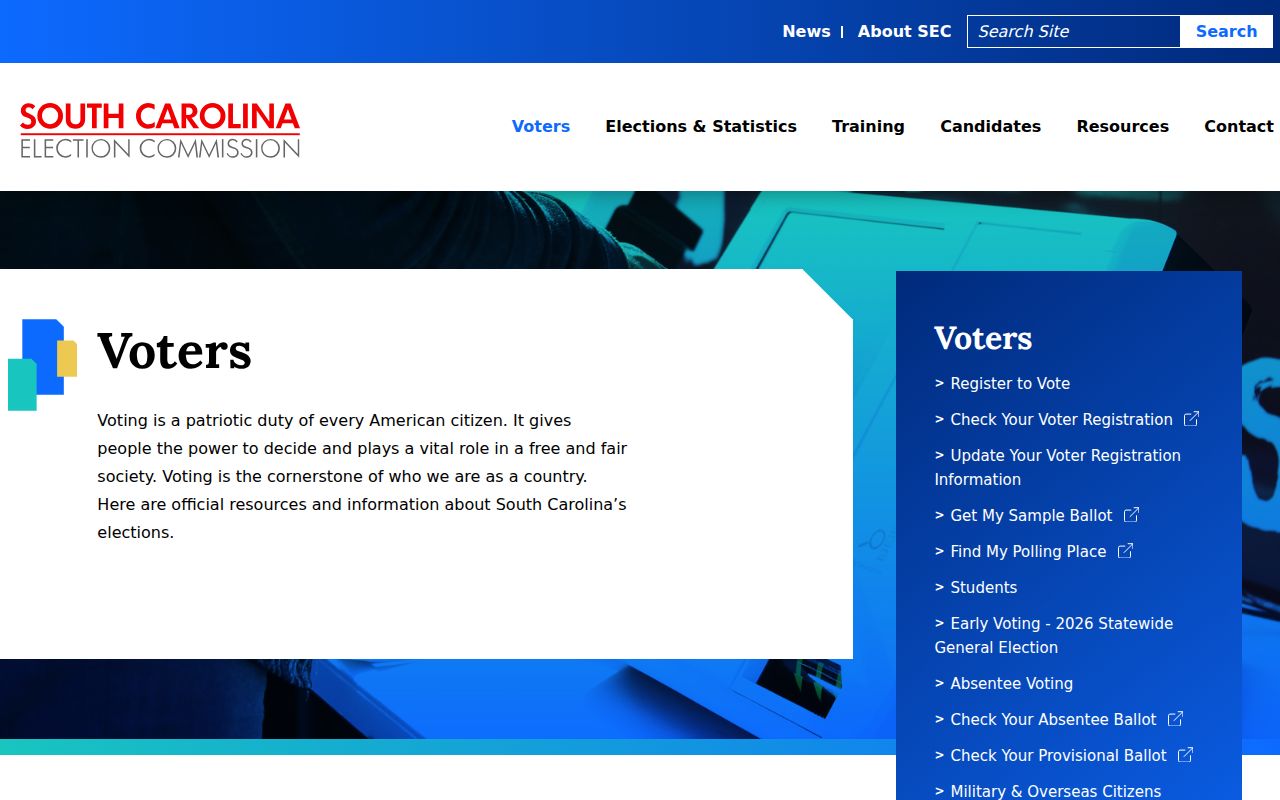
The state voter screen supports personal election functions, not a public Mount Pleasant name or address search for other people.
Note: Ask the election custodian for current eligibility, format, cost, lawful uses, and redactions before requesting any voter-file material.
Vital Paths for a Mount Pleasant Resident
South Carolina Department of Public Health Vital Records handles statewide birth, death, marriage, and divorce certificate or report requests under strict rules. Birth records become public after 100 years. For more recent birth certificates, DPH limits certified access to the registrant who is at least 18, named parents, a legal guardian, or a representative, with a stated exception for immediate family when a deceased registrant’s original certified death record is provided.
For Mount Pleasant marriage research, the county Probate Court remains important when a license predates statewide central filing on July 1, 1950. DPH has divorce reports from July 1, 1962, but the Clerk of Court where the hearing ended keeps the actual decree. Historic research can also use CCPL South Carolina Room holdings, which include incomplete historical vital indexes and microfilm. Those paths identify a source and period. They do not create an unrestricted current-person search.
The DPH birth-record request information lists the official eligibility, identification, and request channels.
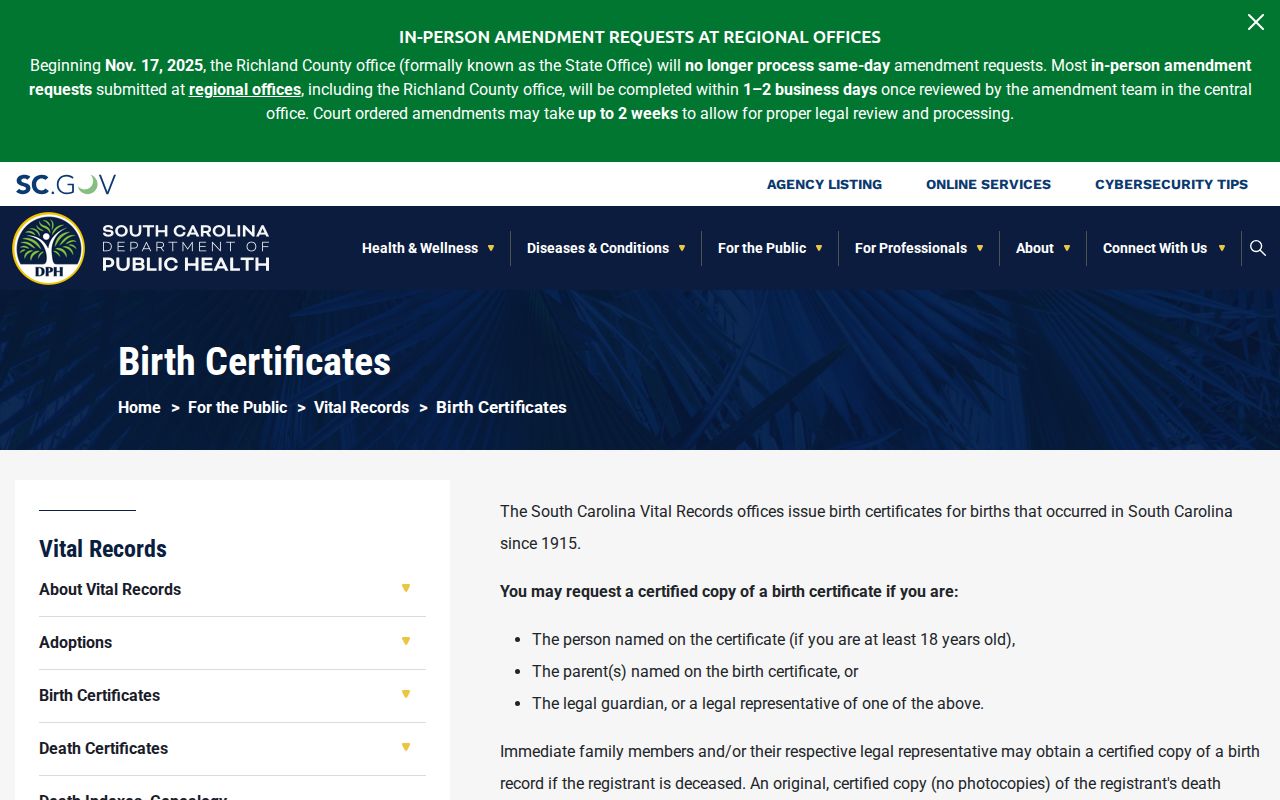
For a Mount Pleasant vital request, use the current DPH form and route rather than treating a name found in an index as permission to obtain a certificate.
Mount Pleasant Probate and Heir Trails
An estate record can be useful when the Mount Pleasant question concerns a decedent, will, or possible heir. Begin with the Charleston County Probate Court estate and will pathways, then inspect only public material through the available online or counter route. Probate rules distinguish public records from private records and private information. A name in a will may identify a relationship, but it can be incomplete, amended, disputed, or restricted in part.
For early Charleston County material, Probate says CCPL’s South Carolina Room holds copies of wills from 1671 through 1871, estate inventories, and miscellaneous records from early periods. The State Treasurer’s unclaimed-property search can offer an asset or estate lead, but a claimant or heir must still prove entitlement. That makes it a cautious Mount Pleasant research trail, not confirmation of identity, location, or a right to contact someone.
Historic household clues often sit in a dated directory or yearbook rather than a current record. The Mount Pleasant city directories provide the local collection route for comparing those older name, address, and occupation entries with probate and census evidence.
Mount Pleasant Business Roles
A business or credential result can verify a limited public affiliation in a one-person Mount Pleasant search. South Carolina’s Business Entities Online supports entity, registered-agent, document-request, and filing paths. Its good-standing notice means an entity has not been dissolved in Secretary of State records. It does not establish that the entity is operating, and an agent or office address is not proof that an individual lives at that address.
The South Carolina Business Entities Online landing page provides the official entity and agent pathway. Sole proprietorships and general partnerships do not file there, so a Mount Pleasant search can properly end without a result. Licensee Lookup through LLR is another official affiliation check, but a credential address can be a practice or mailing location.
| Business search field | Entry type | Requirement | Observed Mount Pleasant use |
|---|---|---|---|
| Type of Search | Dropdown | Selected in the search workflow | Current option list should be checked live. |
| Business name contains | Text | Yes | Returns entities containing the entered terms. |
| CAPTCHA | Challenge | Yes | Complete it before continuing. |
| Result entity link | Result control | After a result | Opens the official profile and related information. |
The South Carolina Business Entities Online portal is the official source for the entity and agent search shown here.
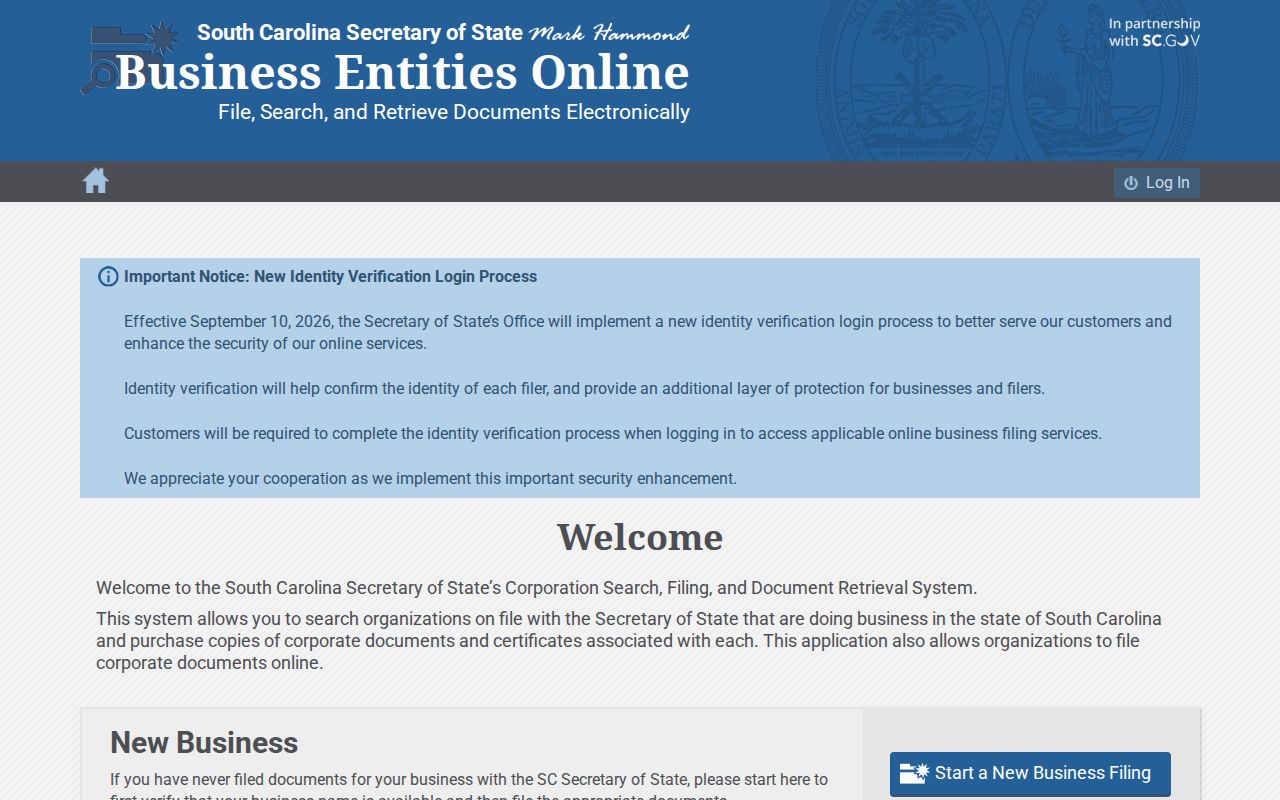
The state business screen can help document a Mount Pleasant entity role, while the result’s date and official filing remain more important than an address label.
Mount Pleasant Requests and Corrections
When a Mount Pleasant record has no usable portal result, direct a written request to the custodian that holds it. South Carolina’s Freedom of Information Act, S.C. Code Ann. §§ 30-4-10 through 30-4-165, gives a person the right to inspect, copy, or receive electronic public records unless an exemption applies. Section 30-4-30 sets a ten-working-day determination period for records no more than 24 months old and twenty working days for older records. Production timing and permitted deposits follow the statute.
A good Mount Pleasant request names the record, the date range, the office, and a request for electronic copies where feasible. The South Carolina FOIA text also lists exemptions under Section 30-4-40. For an incorrect official entry, preserve the record number and contact the particular custodian about its correction or redaction process. A tax card, court file, election record, and state filing each have their own rules.
Privacy Limits for a Mount Pleasant Search
South Carolina’s Family Privacy Protection Act works alongside, not instead of, public-records law. Vital records, court redaction rules, voter administration, and federal protections for DMV data place separate limits on Mount Pleasant information. The reviewed official sources did not verify a statewide address-confidentiality program with a public enrollee route. People concerned about a confidential address should ask a victim-service provider and the relevant Mount Pleasant or state custodian about available procedures.
Recent birth certificates have their own eligibility controls. Probate rules identify living people’s Social Security numbers and financial-account details as private information. Public-record images may also have a custodian process for certain exposed identifiers, such as a Social Security number or account number. That is a request about the specific identifier, not a way to remove an entire public deed or case. Do not send sensitive identifiers in ordinary email unless a custodian’s official form requires them.
Lawful use. Use Mount Pleasant records for personal research, family history, estate questions, civic transparency, or verification with the custodian. South Carolina law restricts stalking and harassment; never use records to threaten, intimidate, harass, or harm another person.
Mount Pleasant State-Source Limits
State public-safety databases are narrow tools, not general Mount Pleasant resident records. The South Carolina Department of Corrections search covers people currently sentenced to and incarcerated by SCDC, not every arrest, local detention, historic custody, or completed sentence. Search results need careful identity matching, and an absent record supports no broad conclusion. Use an official source only for a lawful public-safety question and check the live information before relying on it.
The SCDC Incarcerated Inmate Search accepts SCDC ID, SID, first name, last name, and an optional phonetic-match control. Broad searches are capped at 250 results, so the state instructs users to narrow their terms.
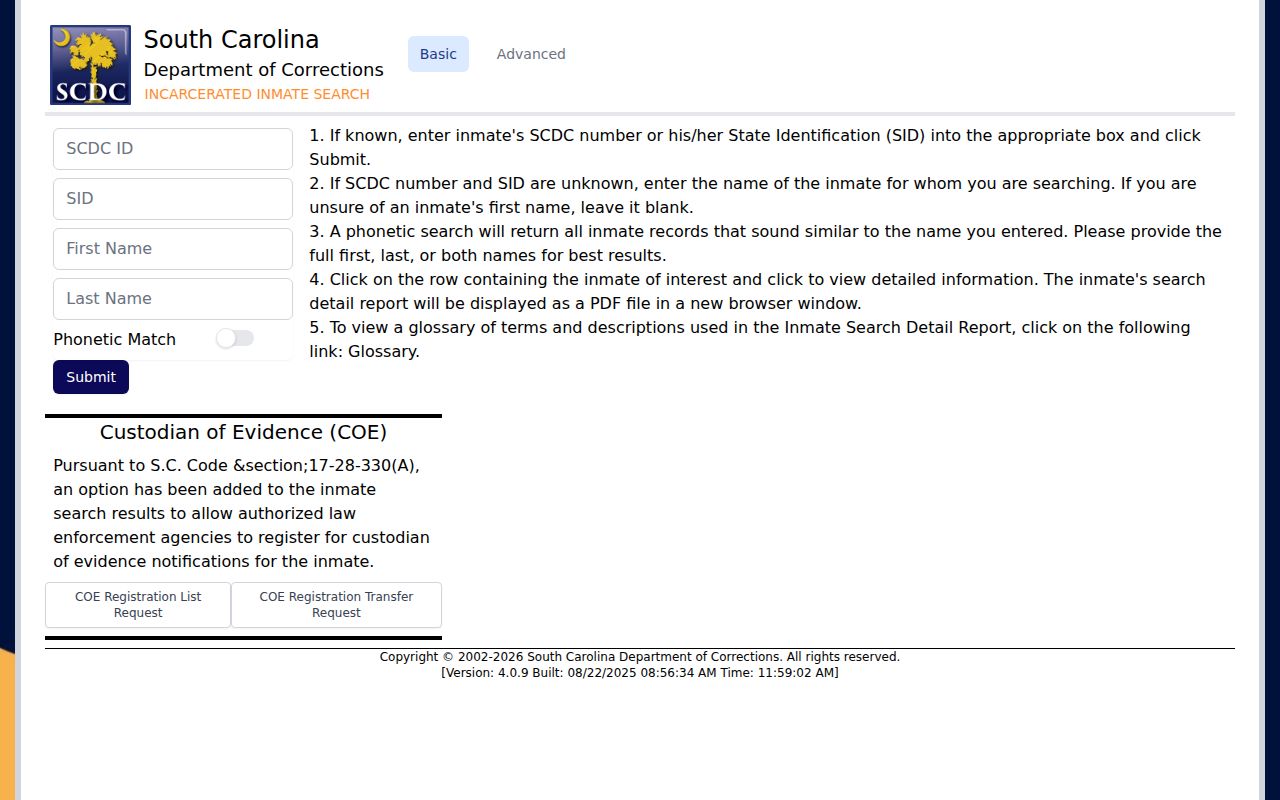
The corrections screen can identify a current state-custody record, but it cannot verify that a person is a Mount Pleasant resident.
The SLED registry information directs the public to the official state registry and explains that live status and available material can change.
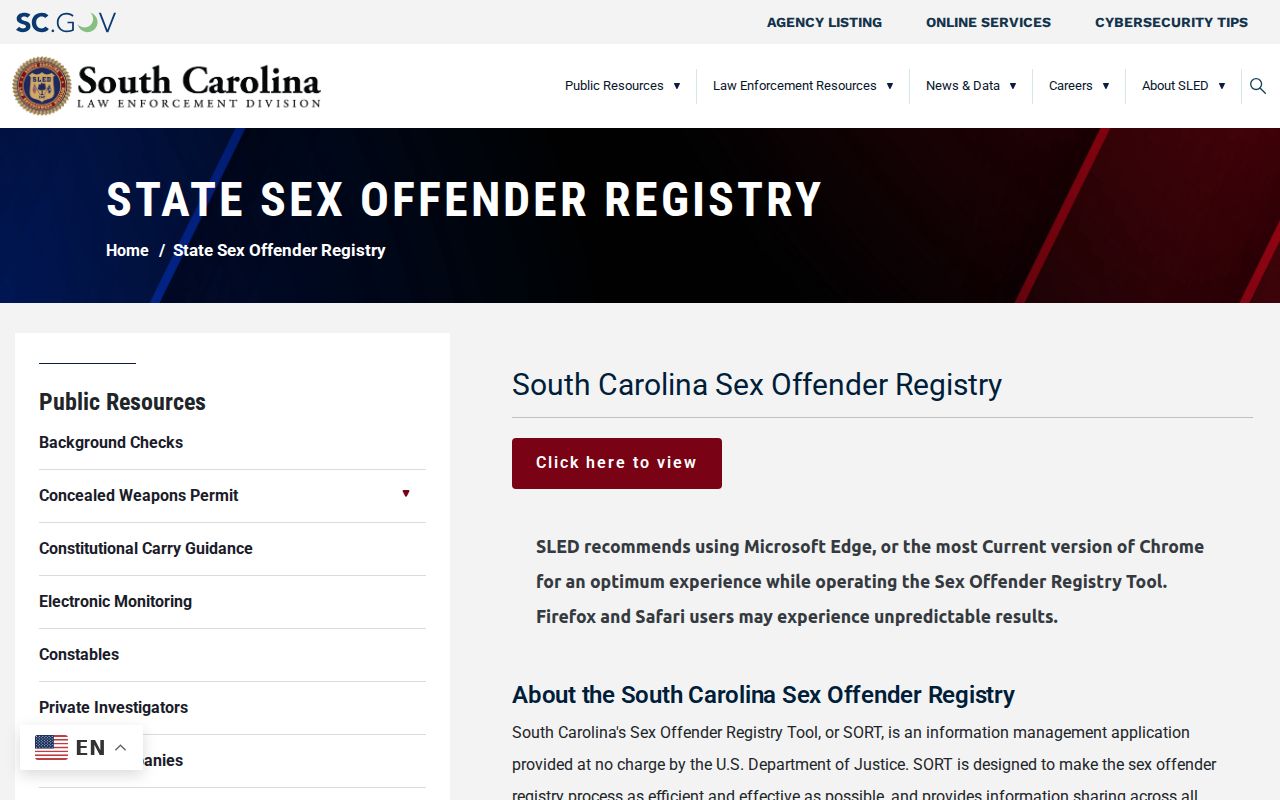
The registry has a public-safety purpose and must never be used as a pretext to stalk, threaten, or harass a Mount Pleasant person.